
The Lone C++ Coder's Blog

The Lone C++ Coder's Blog

The continued diary of an experienced C++ programmer. Thoughts on C++ and other languages I play with, Emacs, functional, non functional and sometimes non-functioning programming.
Timo Geusch

2-Minute Read

Phil Hagelberg published an interesting blog post about the Ergodox keyboard. I’m a self-confessed input hardware nerd and have been a Kinesis Ergo/Advantage user for over a dozen years now. I love those keyboards - otherwise I wouldn’t keep buying them - but Phil makes a very good point that they’re bulky, not something you quickly throw into a bag and take with you for a hacking session at the local coffee shop. It’s good to see alternatives out there, especially as there seems to be less of a focus on ergonomic input devices recently.

Timo Geusch

2-Minute Read

My hardware “scrap pile” contained a Dell Inspiron 530 - not the most glamorous of machines and rather out of date and old, too, but it works and it runs a few pieces of software that I don’t want to reboot my Mac for regularly. Problem was, I had to rebuild it because it had multiple OSs installed and none of them worked. Note to self - don’t mix 32 and 64 bit Windows on the same partition and expect it to work flawlessly.

Timo Geusch

4-Minute Read

Back in 2009 I built a “slightly more than NAS” home server and documented that build on my old blog. I’ve migrated the posts to this blog, you can find them here, here, here, here and the last one in the series here.

The server survived the move from the UK to the US, even though the courier service I used did a good job of throwing the box around, to the extent that a couple of disks had fallen out of their tool less bays. Nevertheless, it continued soldiering on after I put the drives back in and replaced a couple of broken SATA cables and a dead network card that hadn’t survived being hit by a disk drive multiple times.

Timo Geusch

1-Minute Read

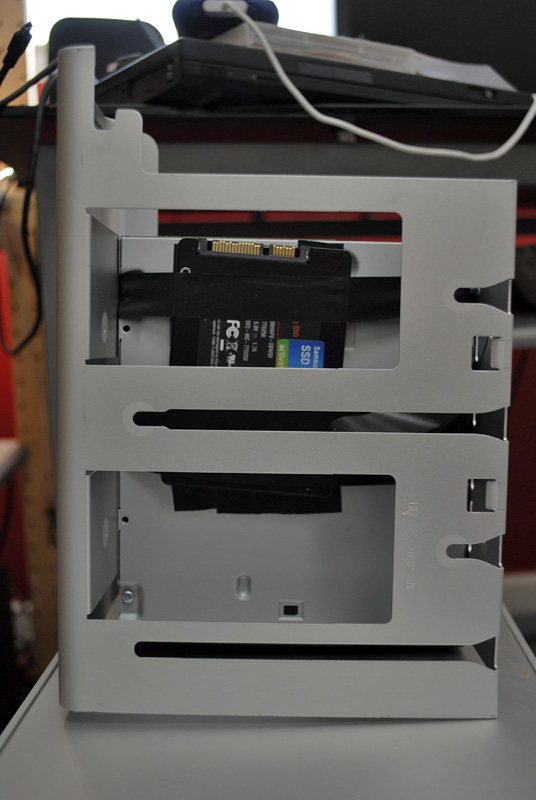
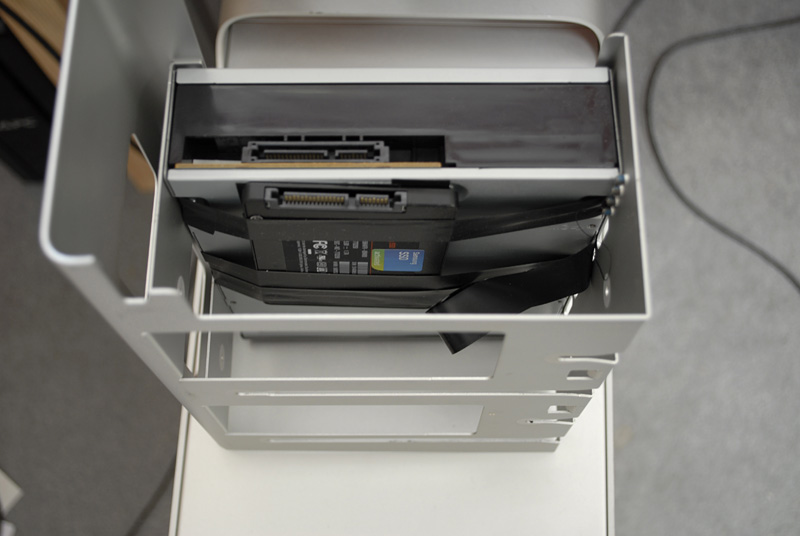
The perils of buying a used computer - yes, I am too cheap or just not rich enough to buy a new Mac Pro - is that sometimes you find that you inherited “interesting” fixes.

Like this SSD mount:

Yes, that’s electrical tape and no, I don’t agree with this special mounting method. At least they did put some electrical tape between the case of the SSD and the case of the DVD drive.

Timo Geusch

2-Minute Read

Last night I did something I was adamant I wasn’t going to do, namely rooting my Android phone and installing CyanogenMod on it. Normally I don’t like messing with (smart)phones - they’re tools in the pipe wrench sense to me, they should hopefully not require much in the way of care & feeding apart from charging and the odd app or OS update. Of course, the odd OS update is can already be a problem as no official updates have been available for this phone (a Motorola Droid) for a while and between the provider-installed bloatware that couldn’t be uninstalled and the usual cruft that seems to accumulate on computers over time, the phone was really sluggish, often unresponsive and pretty much permanently complained about running out of memory. So far it appears that updating the OS and only installing a handful of apps that I actually use as opposed to the ones that I supposedly “need” has resulted in a much better user experience.

Timo Geusch

3-Minute Read

This is a reblog of my “building a home NAS server” series on my old blog. The server still exists, still works but I’m about to embark on an overhaul so I wanted to consolidate all the articles on the same blog.

I’ve blogged building my own NAS/home server before, see here, here, here and here.

After a few months, I think it might be time for an interim update.

In its original incarnation, the server wasn’t as stable as it should have been given my previous experience of FreeBSD. For some reason, it would crash every few weeks and sometimes even hang on reboot. Not good, especially as it happened a few times while I wasn’t home. I guess I should have heeded the warning about the zfs integration being experimental… Things got worse when I added a wireless card and retired my access point. Roughly around this point in time I got fed up with this enough to go back and start building an OpenSolaris VM to try out a mail server setup similar to the one I’m running on FreeBSD.

Timo Geusch

4-Minute Read

This is a reblog of my “building a home NAS server” series on my old blog. The server still exists, still works but I’m about to embark on an overhaul so I wanted to consolidate all the articles on the same blog.

I’ve done some more performance testing and while I’m not 100% happy with the results, I decided to keep using FreeBSD with zfs on the server for the time being. Pretty much all measurements on Linux (both a recent Ubuntu Server and CentOS 5.3) showed lower performance and while OpenSolaris is a lot faster when it comes to Disk I/O and thus would have been my first choice for a pure NAS, the effort in porting my current mail server configuration would have resulted in the server being ready sometime in 2010…

Timo Geusch

3-Minute Read

This is a reblog of my “building a home NAS server” series on my old blog. The server still exists, still works but I’m about to embark on an overhaul so I wanted to consolidate all the articles on the same blog.

Unfortunately the excitement from seeing OpenSolaris’s disk performance died down pretty quickly when I noticed that putting some decent load on the network interface resulted in the network card locking up after a little while. I guess that’s what I get for using the on-board Realtek instead of opening the wallet a little further and buy an Intel PCI-E network card. That said, the lock-up was specific to OpenSolaris - neither Ubuntu nor FreeBSD exhibited this sort of behaviour. I could get OpenSolaris to lock up the network interface reproducibly while rsyncing from my old server.

Timo Geusch

3-Minute Read

This is a reblog of my “building a home NAS server” series on my old blog. The server still exists, still works but I’m about to embark on an overhaul of these posts so I wanted to consolidate all the articles on the same blog.

The good news is that the hardware seems to be behaving it for a while now and everything appears to Just Work. FreeBSD makes things easy for me in this case as I’m very familiar with it so I only spent a few hours getting everything set up. So far, so good.

Timo Geusch

5-Minute Read

This is a reblog of my “building a home NAS server” series on my old blog. The server still exists, still works but I’m about to embark on an overhaul so I wanted to consolidate all the articles on the same blog.

Up to now I’ve mostly been using recycled workstations as my home mail, SVN and storage server. Nothing really wrong with that as most workstations are fast enough but I’m running into disk space issues again after I started backing up all the important machines onto my server. That’s especially annoying as I started using Time Machine on my iMac and now haven’t got enough space left on the server to also back up the MacBook. Time Machine is great as a backup solution simply because it is so unobtrusive and it appears to just work.

Recent Posts

Categories

About

A developer's journey. Still trying to figure out this software thing after several decades.