The Lone C++ Coder's Blog

The Lone C++ Coder's Blog

The continued diary of an experienced C++ programmer. Thoughts on C++ and other languages I play with, Emacs, functional, non functional and sometimes non-functioning programming.

Timo Geusch

8-Minute Read

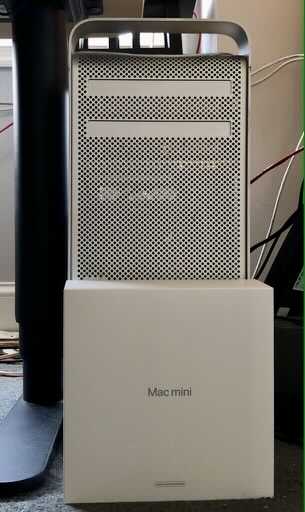
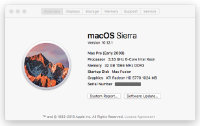
I’ve been using a 2009 cheesegrater Mac Pro for quite a while now. I bought it used quite a while ago - around 2013 if I remember correctly - and it’s been serving as my main photo/video/general programming workhorse, although the latter tasks have been taken over mostly by a Linux machine housed in the infamous NZXT H1 case. It’s been upgraded a lot during its life - now has the latest 6 core Xeon these machines support including the upgrade to 2010 firmware, USB 3.0 ports, PCIe SATA cards to get SATA-3 and a PCIe NVMe card, plus a Mac-flashed AMD RX580. Nevertheless, it was showing more and more signs of getting long in tooth. Plus some of the software that I’m using really would like to use macOS 10.15, which this Mac Pro doesn’t support unless I effectively turn it into a Hackintosh. Combine that with distinct signs of the machine getting geriatric and I decided that I was time for a replacement. But what?
Timo Geusch

2-Minute Read

As I mentioned in my post from a few months ago, I had received the temporary fix in the form of the nylon screws and nuts from NZXT. At that point in time, NZXT’s customer support was not able to tell me when to expect the “real” fix, namely the updated PCIe riser.

I ended up contacting them again towards the end of July to see what the status was and apparently, my request had somehow fallen through the cracks. To the credit of NZXT’s customer support, after I reached out to them I received the riser within a few days.

Timo Geusch

1-Minute Read

Not much to update since the last post on this topic, I’m still waiting for the updated PCIe riser. Although I do have to admit that based on the latest video from Gamers Nexus on this saga, I’m not holding my breath.

With the current shipping issues I’ll give it another month or so and see if I get any PCIe riser before making a decision if I write off this case and rebuild the machine in a different SFF case.

Timo Geusch

5-Minute Read

First, I’m very much a “very occasional” gamer so I’m usually not the target audience for most gaming related accessories and parts. I did however want to rebuild my rather large grey box Linux/Windows workstation into something more compact with a watercooler for the CPU. The NZXT H1 seemed at that point to be a really good match for my requirements and had received good reviews. One was duly ordered, together with a Mini-ITX motherboard and somehow, a better graphics card also snuck on the shopping list. Putting the “new” machine together, mostly from the parts that made up the previous workstation was a bit more fiddly than usual due to the compact case, but not a big issue other than my eyes getting older and my fingers a little more clumsy with time. But nothing that I would consider an issue given how many PCs I put together over the years. I hadn’t had the machine up and running for a month when the first articles on the issues with the NZXT H1 surfaced in various mainstream publications. For some reason I wasn’t that impressed with the possibility of the computer catching fire, but I initially sat on my hands until Gamers Nexus found out that the nylon screw “fix” was more of a band aid.

Timo Geusch

2-Minute Read

I don’t usually do Happy New Year posts, but given how “well” 2020 went I thought it was appropriate to start 2021 with a whimsy post.  This post is probably going to date me since it’s been a few years - OK, decades - since these were current.

Well, it’s not the actual computer, but the same model. I was first exposed to computers during the personal computer heyday of the early 1980s. Back then, my school had two computers, one TRS 80 Model 3 and one Sinclair ZX81. The ZX81 was used to teach pupils rudimentary programming. I wouldn’t be surprised if one of the teachers actually built it from a kit as that was the cheapest way to get into one.

Keep in mind that I grew up in Europe where computers like the Apple ][ were very expensive and didn’t gain much traction in the educational field. Or with hobbists, either. Yes, there were some around but you saw a lot more VIC20s, C64s or Ataris. A lot of schools including mine bought European manufactured computers like Sinclairs and later, Amstrad/Schneider CPC 464s.

Timo Geusch

2-Minute Read

As I’ve mentioned before on this blog, I still have one of the “cheese grater” Mac Pros around. It’s a 2009 that I upgraded somewhat with SSD, 6 core Xeon and a few other small goodies. As I split my time between Linux, Windows and macOS, I like having it around but can’t really justify getting a newer machine.

Anyway, I’m upgrading my monitor to wide screen monitor and the old graphics card (Apple branded AMD Radeon 7970) was unlikely to be too happy about it. Plus, I had a spare AMD RX470 lying around from upgrading the graphics card in my PC. The Hackintosh community seems to generally recommend AMD cards for newer versions of OS X, so I figured I’d give it a try. The RX470 is listed as a supported card in newer versions of OS X after all.

Timo Geusch

3-Minute Read

I’ve been an unashamed fan of the old “cheese grater” Mac Pro due to its sturdiness and expandability. Yes, they’re not the most elegant bit of kit out there but they are well built. And most importantly for me, they are expandable by plugging things inside the case, not by creating a Gordian Knot of hubs, Thunderbolt cables, USB cables and stacks of external disks all evenly scattered around a trash can. Oh, and they’re designed to go under a desk. Where mine happens to live, right next to my dual boot Linux/Windows development box.

Timo Geusch

2-Minute Read

Putting the OpenSprinkler and Raspberry Pi together was easy, getting them to run showed my inexperience when it comes to playing with hardware. The overall install went pretty smoothly and the documentation is good and easy to follow so I’m not going to ramble on about it for very long, but just throw up some notes.

First, my old card reader didn’t want to play with any of my computers. Now, the card reader is ancient, but should have been able to work with an SD card. No joy under and available OK, so I ended up having to get a new SD/microSD only card reader.

Timo Geusch

1-Minute Read

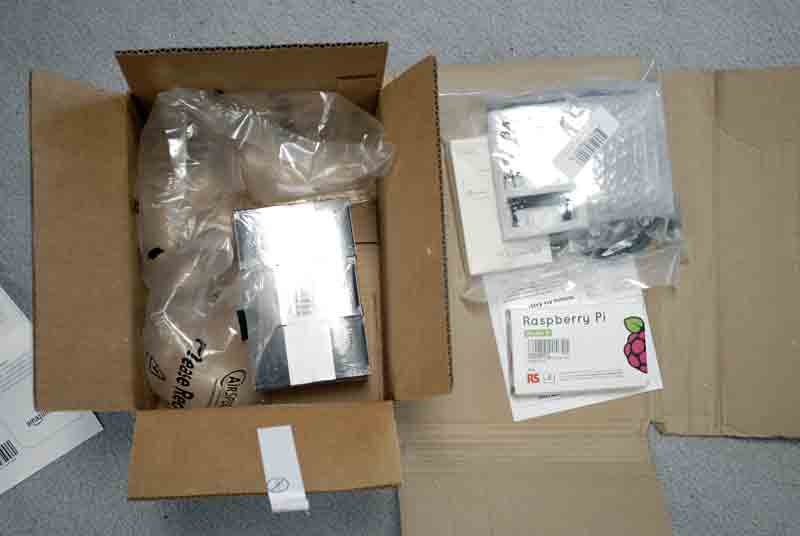
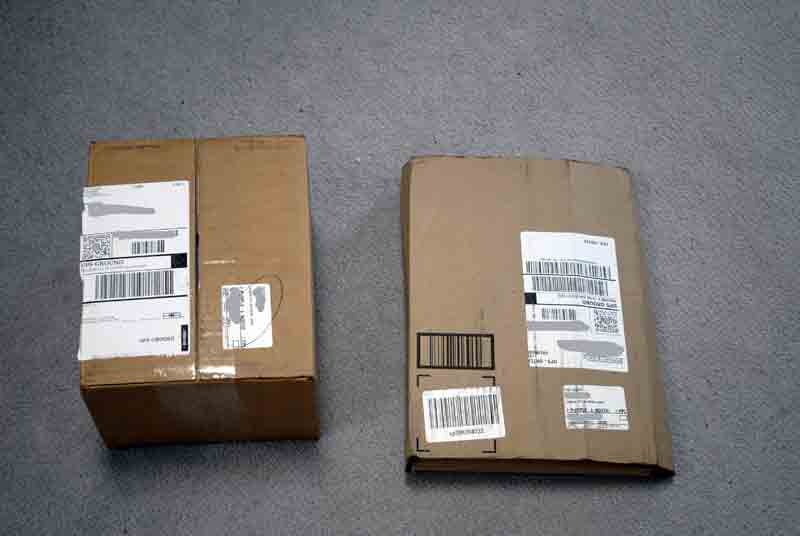
The Raspberry Pis have landed. Guess which box contains the sensitive electronics and is worth about twice as much as the other one:

That’s right:

Geez Amazon, what is it about the shoddy packing when it comes to items that are bought via Amazon Fulfillment Services? This is not the first time I got something that can only be described as badly packaged.

The OpenSprinkler kit has also arrived, all I’m currently waiting for is a smaller memory card as the regular SD cards I bought are a little to big to fit into the OpenSprinkler case. Anyway, I should have the new hardware up and running on Friday.

Timo Geusch

3-Minute Read

I normally don’t play much with hardware, mainly because there isn’t/wasn’t much I want to do that tends to require hardware that’s not a regular PC or maybe a phone or tablet. This one is different, because no self-respecting geek would want the usual rotary control “programmable” timer to run their sprinkler system, would they?

We do live at the edge of the desert and we have pretty strict watering restrictions here. I’m all for it - water being a finite resource and all that - and I want to improve our existing sprinkler system at the same time. It doesn’t help that the people who set up the sprinklers were probably among the lower bidders, to put it politely. OK, to be blunt they seem to have failed the “giving a shit” test when they put the system together. I’ve spent a lot of  last year’s “gardening hours” just trying to make it work somewhat. Not well, just “somewhat”. Time to fix that.

Recent Posts

Categories

About

A developer's journey. Still trying to figure out this software thing after several decades.